

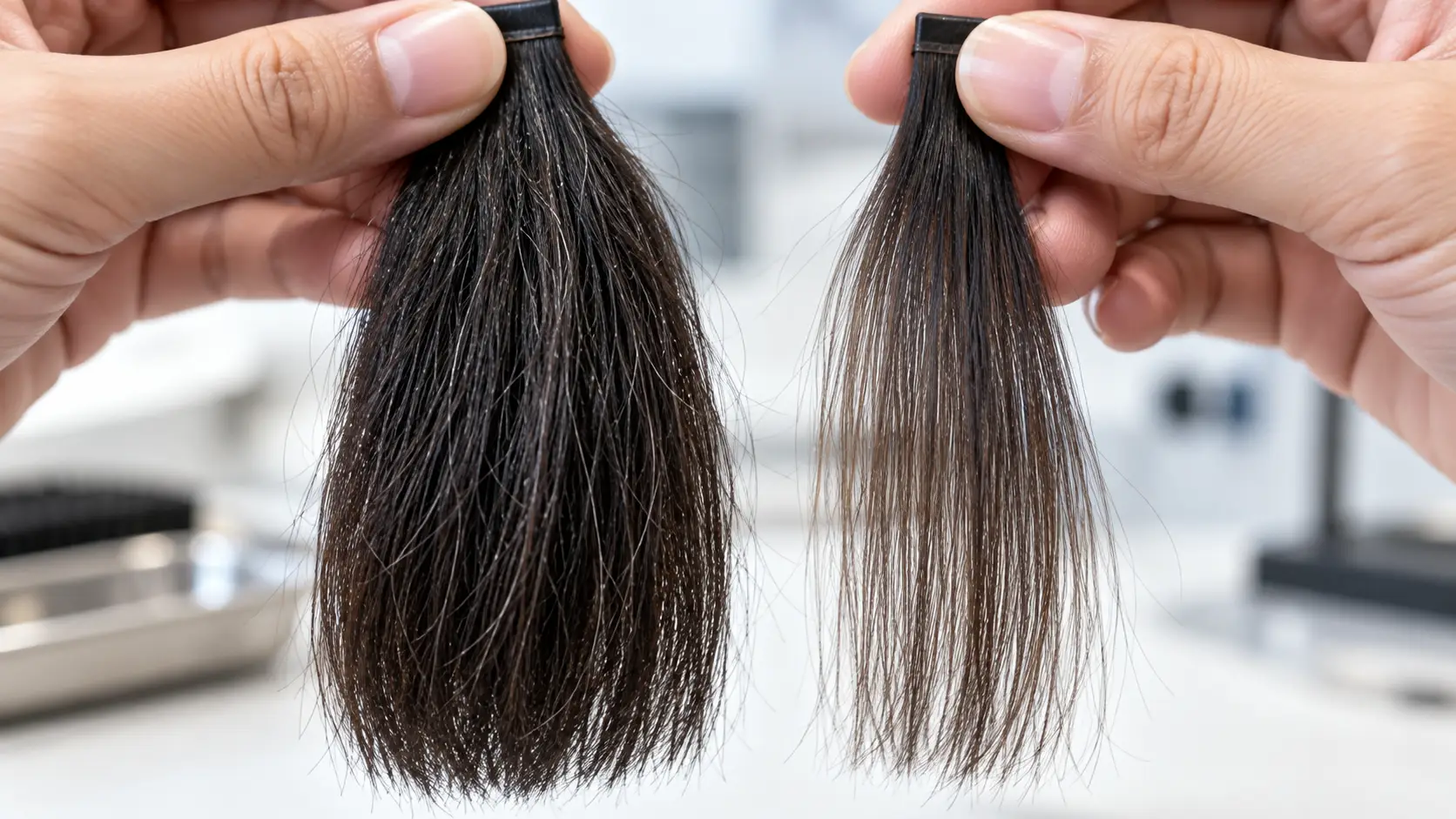
Indian hair and European hair differ mainly in diameter and cross-section shape. Indian hair strands run thicker and more circular. European hair strands are finer and more oval. That single difference shapes how each one looks, lasts, and blends with your own natural hair.
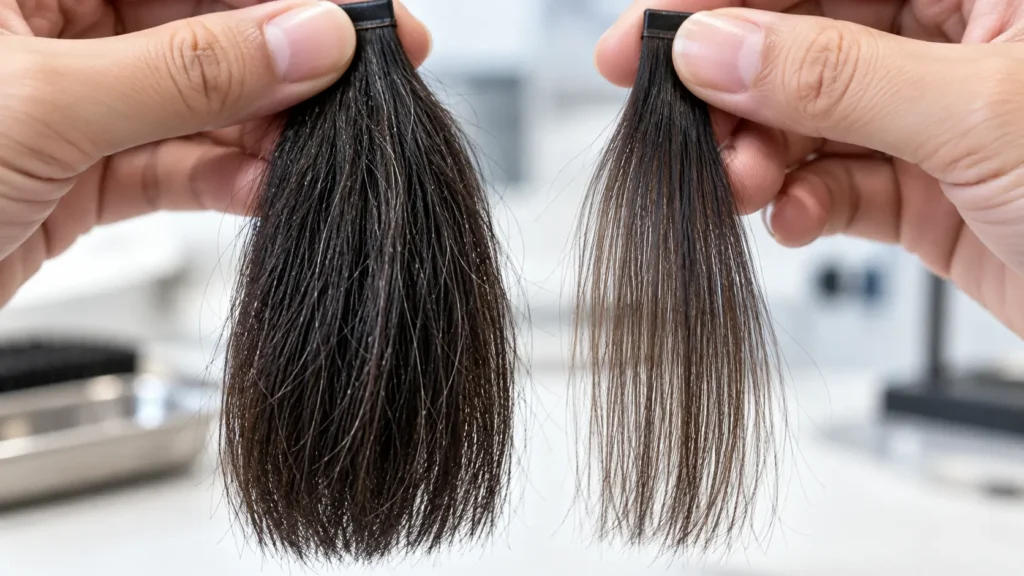
Most guides stop at “European is premium, Indian is the budget pick.” What matters in Mumbai is how well the hair system matches your own hair. It should blend in and look natural.
What the Actual Research Shows
A study at PMC found that Indian and other Asian hair is usually thicker and more round in shape. Caucasian hair is usually finer and more oval in shape. This isn’t a marketing claim. It’s a measured structural difference.
In my experience fitting systems for clients across Mumbai, this shows up in a very practical way. Most Indian clients have naturally thicker, denser hair than European hair typically has. Fine European hair can look thinner than your natural hair. This can make the blend look uneven where the system meets your own hair.
Indian Hair: The Practical Choice for Most Indian Clients
Indian hair, especially Remy Indian hair, keeps the cuticle intact. The hair strands also run in the same direction. That single detail matters more than people expect. Cuticles are the microscopic scales along each strand. When they all point the same way, the hair resists tangling and holds its texture longer.
Indian hair is closer to the natural thickness and texture of most Indian hair. This helps it blend better at the hairline. The strands don’t stand out against your own hair the way finer imported hair sometimes can.
It also costs less than European hair. It can still last well for most users.
European Hair: Where It Actually Makes Sense
European hair is genuinely finer and softer. It suits lighter natural shades and finer natural hair textures well. If your natural hair is thin or fine, European hair may blend better. Indian hair may look too thick in comparison.
The tradeoff is cost. European donor hair is harder to find. It is often collected from ponytails with intact cuticles. This makes it more expensive.
The Blending Question Nobody Talks About
Here’s the part most comparison guides skip entirely. A hair system isn’t judged by how good the hair looks on its own. It’s judged by how invisibly it blends with what’s already growing on your head.
If your natural hair is thick or dense, European hair may look too fine. Indian hair is usually thicker and can blend better with your natural hair.
This doesn’t mean European hair is a bad choice. It means the “better” hair type depends on matching your own hair, not on which one sounds more premium.
Cost and Lifespan Side by Side
| Indian Hair (Remy) | European Hair | |
|---|---|---|
| Texture | Closer match for most Indian clients | Finer texture |
| Cost | More affordable | More expensive |
| Durability | Good with proper care | Good, often longer with virgin hair |
| Best for | Thick or coarse hair | Fine or thin hair |
How Hair Type Gets Decided During Your Fitting
This isn’t a decision to make from a comparison table alone. During your consultation, your specialist checks your hair thickness, texture, and color. This helps them choose the right hair type for your fitting. The goal is to match the system to your hair, not just your budget.
Hair type also connects directly to what you’ll spend over time. Our article explains how hair quality affects your long-term cost. Choosing the wrong hair type can mean more frequent replacements.
Frequently Asked Questions
What’s the main difference between Indian hair and European hair in hair systems?
Indian hair strands run thicker with a more rounded cross-section. European hair strands are finer with a more oval shape. This affects how each blends with your natural hair and how much it costs.
Is European hair actually better quality than Indian hair?
Not inherently. It’s finer and suits thin, naturally light hair well. Indian hair, especially Remy Indian hair, is durable. It also blends well with thick or coarse natural hair.
Which hair type blends best with my own natural hair if I’m Indian?
For most Indian clients with thick or coarse hair, Indian Remy hair blends better. Its thickness and texture are closer to your natural hair.
What is Remy Indian hair?
It’s Indian hair collected with the cuticle intact and running in one direction, root to tip. This reduces tangling and helps the hair hold its texture and shine longer than non-Remy hair.
Does hair type affect how long a hair system lasts?
Yes, though care matters more than origin. Both Indian Remy hair and European hair last well with proper maintenance. A mismatched texture can make a hair system look worn out faster. Hair origin is usually not the main reason.
Is European hair worth the extra cost for Mumbai clients?
It depends on your natural hair texture, not your budget alone. If your hair is naturally fine, it can be worth it. If your hair is thick or coarse, Indian hair can give a better match. It is also more affordable.
Not sure which hair type actually matches your own? Book a consultation and we’ll match it to your texture, not just your budget.