

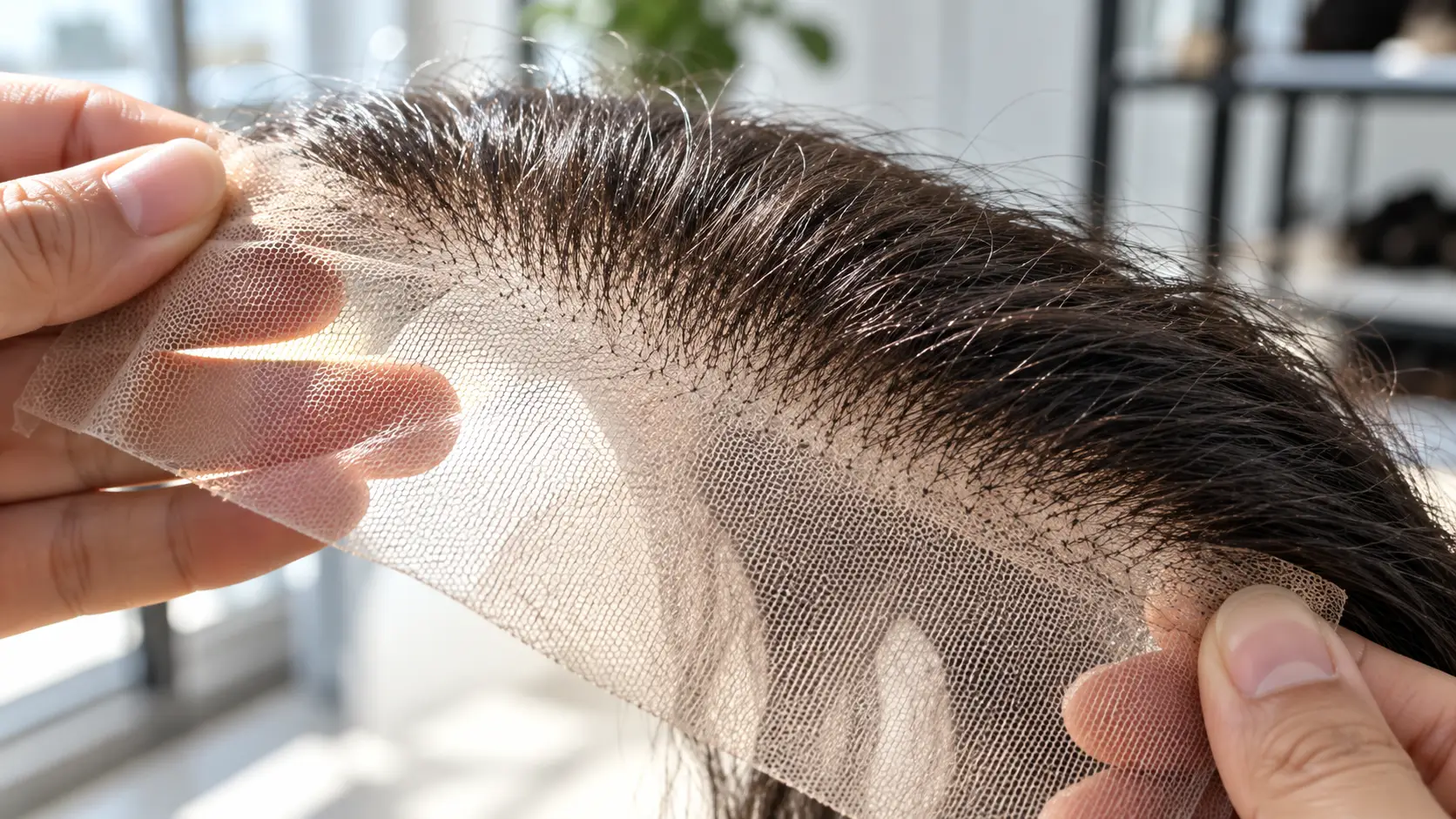
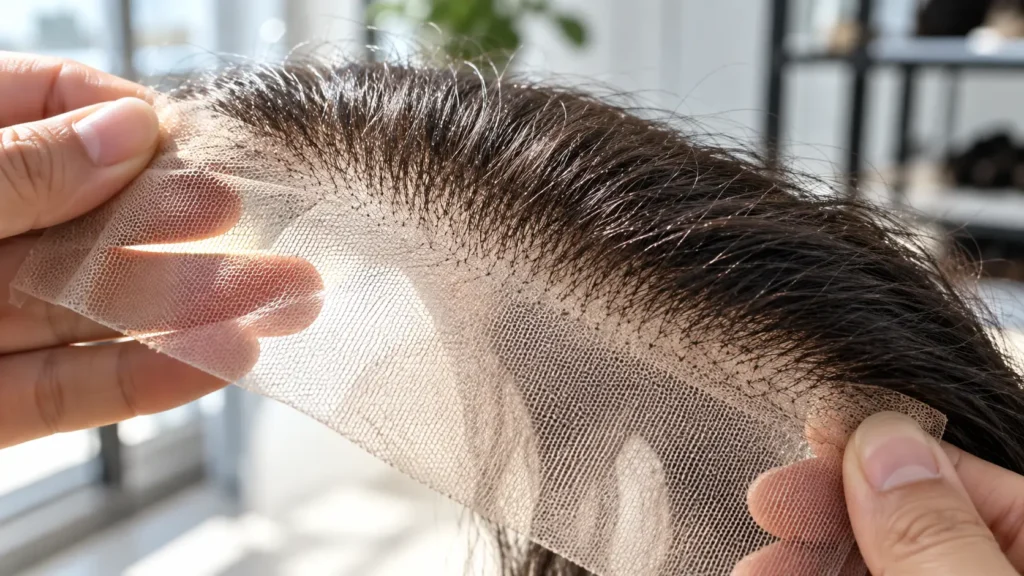
A lace front hair system uses a thin lace panel at the front hairline. The rest of the base is a different material, often mono or skin. This gives you the most natural hairline lace can offer, without the cost or fragility of a full lace base.
That’s the short answer. Here’s everything else you need to know before you pick one.
Table of Contents
What “Lace Front” Actually Means
Lace front is not a full base type. It’s a hybrid design. Only the front section, from ear to ear, uses lace. The rest of the system uses a sturdier material like mono, PU, or skin.
This matters because it solves a real tradeoff. Full lace looks the most natural but wears out fast. Full mono or skin lasts longer but the hairline isn’t quite as invisible. Lace front gives a more natural hairline. The stronger base provides support everywhere else.
In my experience, most first-time clients do not need full lace. They mainly need a natural-looking hairline. Lace front usually gives them that at a lower cost and with less risk of damage.
French Lace vs. Swiss Lace
Both types show up in lace front systems, and the choice changes how the system feels and lasts.
French lace is thicker and more durable. It typically lasts 3 to 6 months with good care. It holds more hair density and handles daily wear better.
Swiss lace is finer and softer. It looks slightly more natural up close. But it’s also more delicate, usually lasting only 1 to 2 months before it needs replacing.
Neither one is “better” outright. French lace suits people who want fewer replacements. Swiss lace is a good choice for a very natural look. It needs more frequent care and maintenance.
Why People Choose Lace Front
Three reasons come up again and again with clients.
- A natural hairline. Light passes through the lace mesh the way it passes through real skin, so the edge doesn’t look “placed on.”
- Styling freedom. You can push hair back or part it near the front without exposing an obvious base line.
- Lower cost than full lace. You get the natural edge without paying for lace across the entire base.
The Honest Downside: Mumbai’s Climate
Most guides stop at the benefits. Here’s what they leave out.
Lace is breathable, which sounds like an advantage in heat. And it is, up to a point. The open mesh lets sweat and moisture stay close to your scalp. This can be a bigger issue during Mumbai’s hot, humid months and monsoon.
Fungal skin infections are more common in hot and humid areas. A lace front that stays damp for hours can increase this risk. This is especially true around the hairline, where sweat collects first. Proper cleaning and drying can help.
Materials that block moisture can make skin irritation worse. Sweat and adhesive can build up underneath. Lace allows moisture to escape, but the adhesive strip may not. This area needs extra care during Mumbai’s wet months.
None of this rules out lace front for Mumbai wearers. It just means the cleaning schedule matters more here than it would somewhere drier.
Who Should Think Twice About Lace Front
Lace front isn’t the right call for everyone.
- First-time wearers who want low maintenance. Lace needs more gentle handling than mono or skin. Adhesive can also seep through the mesh, making it harder to clean.
- Anyone with a packed, high-sweat schedule. Gym workouts and outdoor work in Mumbai’s heat can mean more cleaning.
- Budget-conscious buyers replacing systems often. Swiss lace especially needs replacing every 1 to 2 months, which adds up over a year.
If any of these sound like you, a full mono or skin base, or a different hybrid combination, might serve you better.
How Lace Front Fits Into the Fitting Process
Base choice isn’t something you decide alone from an article. During your consultation, your specialist checks your scalp, activity level, and hairline needs. This helps them choose the right base for your fitting.
Maintaining a Lace Front System
Lace needs more care than mono or skin. Adhesive can get into the mesh during cleaning.
- Clean with products made for hair systems, not regular shampoo
- Avoid tugging or pulling directly on the lace when removing or adjusting
- Dry the base fully before reapplying, especially during monsoon
- Have it professionally checked and maintained on a regular cycle
For regular care, follow the same cleaning steps used for other hair systems. Take extra care when cleaning the lace.
Frequently Asked Questions
What is a lace front hair system?
It is a hybrid hair system. It has a lace panel at the front hairline. The rest of the base uses a stronger material, such as mono or skin.
What’s the difference between French lace and Swiss lace?
French lace is thicker and lasts 3 to 6 months. Swiss lace is finer, looks slightly more natural, but typically lasts only 1 to 2 months.
How long does a lace front hair system last?
The lace part usually needs replacing every 1 to 6 months. This depends on the lace type and how well you care for it. The rest of the base, made from mono or skin, generally lasts longer.
Is a lace front hair system good for Mumbai’s climate?
Yes, but it needs a tighter cleaning schedule than in drier climates. Sweat and humidity build up faster under the front edge. So, dry the base fully and clean it regularly.
Is a lace front hair system good for beginners?
It can be, but it demands more careful handling than mono or skin. First-time users who want an easy routine may do better with a different base.
Can a lace front be combined with other base materials?
Yes, that’s actually the whole design. Lace covers the front hairline, and mono, PU, or skin makes up the rest of the base for added strength and durability.
Not sure if lace front is right for your scalp and lifestyle? Book a consultation and we’ll help you choose the right base from day one.