

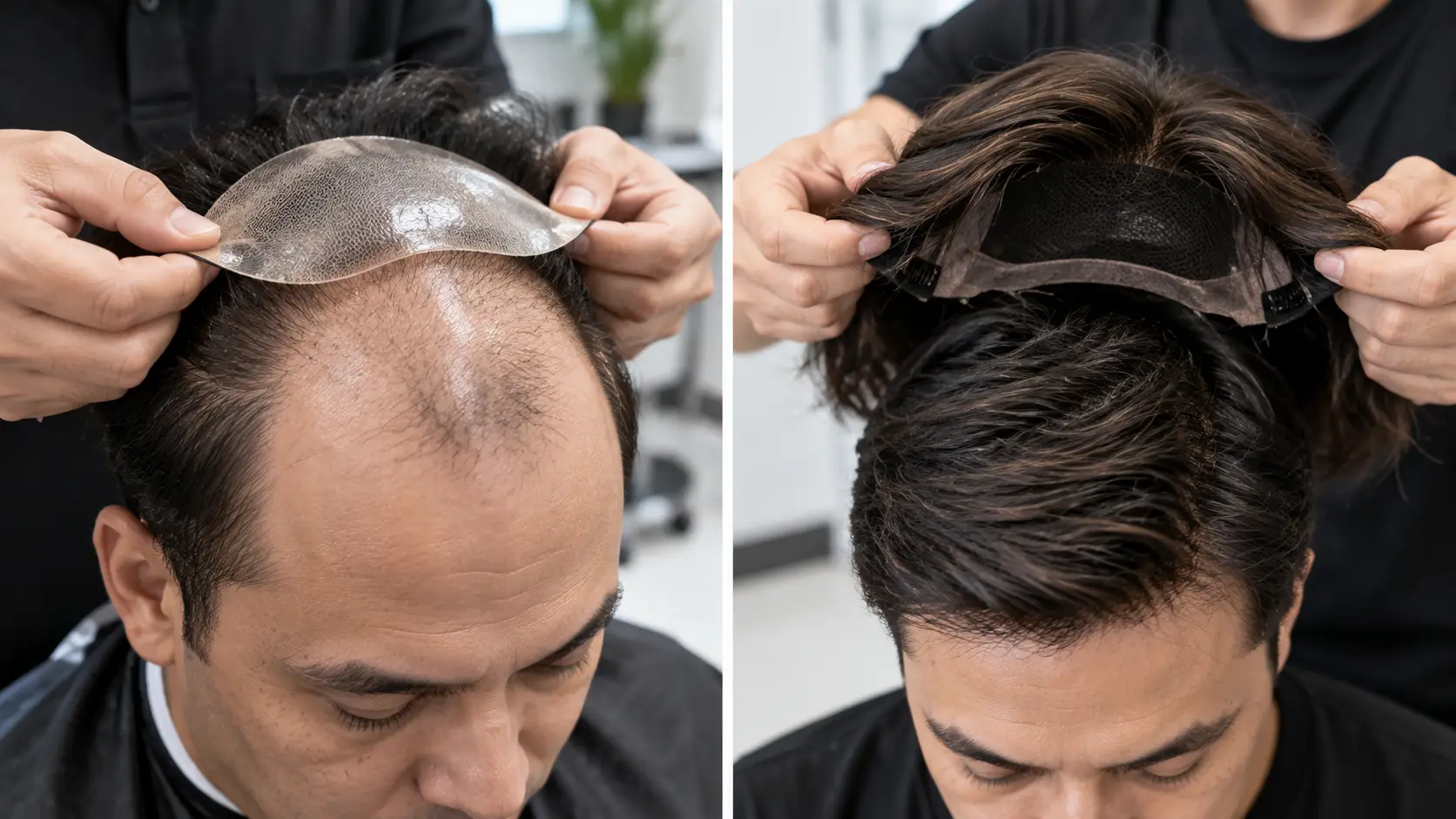
A hair system is glued or taped to your scalp and worn continuously for weeks at a time. A wig sits on top of your head and comes off daily. This difference affects many things. It affects how natural it looks, how you care for it, and how it affects your scalp.

Most guides list this as a feature comparison. Here’s the part that actually matters day to day, especially if you live somewhere as hot and humid as Mumbai.
Table of Contents
Attachment: The Real Dividing Line
A hair system bonds to your scalp with medical-grade adhesive or tape. Once it’s on, it stays on through sleep, showers, workouts, even swimming. You don’t take it off each night.
A wig sits on top of your hair or a shaved scalp, held by clips, combs, or an elastic band. It’s designed to come off. Some people remove it every night. Others wear it through the day and take it off before bed.
This one difference explains almost every other difference between the two.
Coverage: Partial vs. Full
Hair systems are made for partial hair loss. They can cover thinning at the crown, a receding hairline, or bald patches. The base covers just the area that needs it, and it blends into your remaining natural hair at the edges.
Wigs typically cover the entire scalp. This makes them better for total hair loss. This can happen due to genetics, chemotherapy, or other causes. There may be no natural hair left to blend with.
Naturalness and Customization
Hair systems are built to disappear. The base is thin and matches your scalp tone. The hairline is designed strand by strand to look natural. Because it stays in place, it moves with you the way real hair does.
Wigs have improved a lot too, but customization is more limited. They usually come pre-styled and can be adjusted. But they do not blend with your natural hairline like a hair system does. This is because there is usually no hairline left to blend with.
What Continuous Wear Means for Your Scalp
Here’s the part most comparisons skip entirely.
Wearing a hair system for weeks can affect your skin differently than removing a wig each night. Materials that block moisture can trap sweat and cause irritation. Research published on PubMed supports this.
That doesn’t make a hair system unsafe. Millions of people wear them long-term without issue. With a hair system, the base, cleaning, and scalp care matter more. This is different from a wig that you remove every night.
This matters even more in Mumbai. Fungal skin infections are more common in hot and humid areas. Rates can reach 40% in some tropical regions, according to a PMC review.
A hair system worn in Mumbai’s heat and humidity needs regular cleaning. It may need more care than the same system used in a dry climate.
A wig is removed each night, so the scalp gets time to breathe. This can reduce the risk of skin problems.
Lifestyle and Activity
A hair system can stay in place during swimming, heavy sweating, and exercise. A wig needs to be removed before swimming or intense exercise because it is not bonded to the scalp.
If you want to change styles or colors often, a wig gives you more flexibility. It is also useful if you only need coverage sometimes. A hair system is made for one natural look that you wear regularly.
Cost and Lifespan
Hair systems usually cost more at first. They are custom-made and need professional fitting and care. But they’re built for continuous daily wear over months, not occasional use.
Wigs come in many price ranges. You can choose a cheap synthetic wig or a more expensive human hair wig. Since you remove them daily, they may last longer with proper care and storage.
Which One Actually Fits You
For many clients in Mumbai, the choice comes down to one question: Do you want to think about it every day or not?
People with partial hair loss who want a natural look often choose a hair system. Clients who want flexibility, or are covering total hair loss, often lean toward a wig.
This isn’t a decision to make from an article alone. During your consultation, we check your hair loss, activity level, and scalp condition. This helps us choose the right option and explains how a hair system gets custom-fitted to your scalp.
Attachment quality also connects directly to cost over time. Our article explains why attachment quality affects what you’ll spend long-term. Cutting corners can cost more over time.
Frequently Asked Questions
What’s the actual difference between a hair system and a wig?
A hair system is glued or taped to your scalp and worn continuously for weeks. A wig sits on top of the head and is removed daily or as needed.
Can you wear a hair system every day without taking it off?
Yes. Hair systems are made for continuous wear. You can sleep, shower, and exercise while wearing them. Unlike wigs, they do not need to be removed each night.
Which one is better for hair loss, a hair system or a wig?
If you have some natural hair left, a hair system can blend more naturally. For total hair loss, a wig typically offers more practical full coverage.
Is a hair system safe to wear long-term?
Yes, with proper cleaning and maintenance. A hair system can trap more moisture against the scalp. This makes regular cleaning more important than with a wig you remove each night.
Which is better suited to Mumbai’s climate, a hair system or a wig?
Both can work. A hair system needs regular cleaning because it stays on in Mumbai’s heat and humidity. A wig, removed daily, naturally gives the scalp more breathing time.
Does a hair system cost more than a wig?
Usually, yes, upfront, since it’s custom-fitted and professionally maintained. But it is made for daily wear over several months. This can make it more cost-effective than a wig.
Still deciding between a hair system and a wig? Book a consultation to find the right option for your hair loss, lifestyle, and scalp.
