

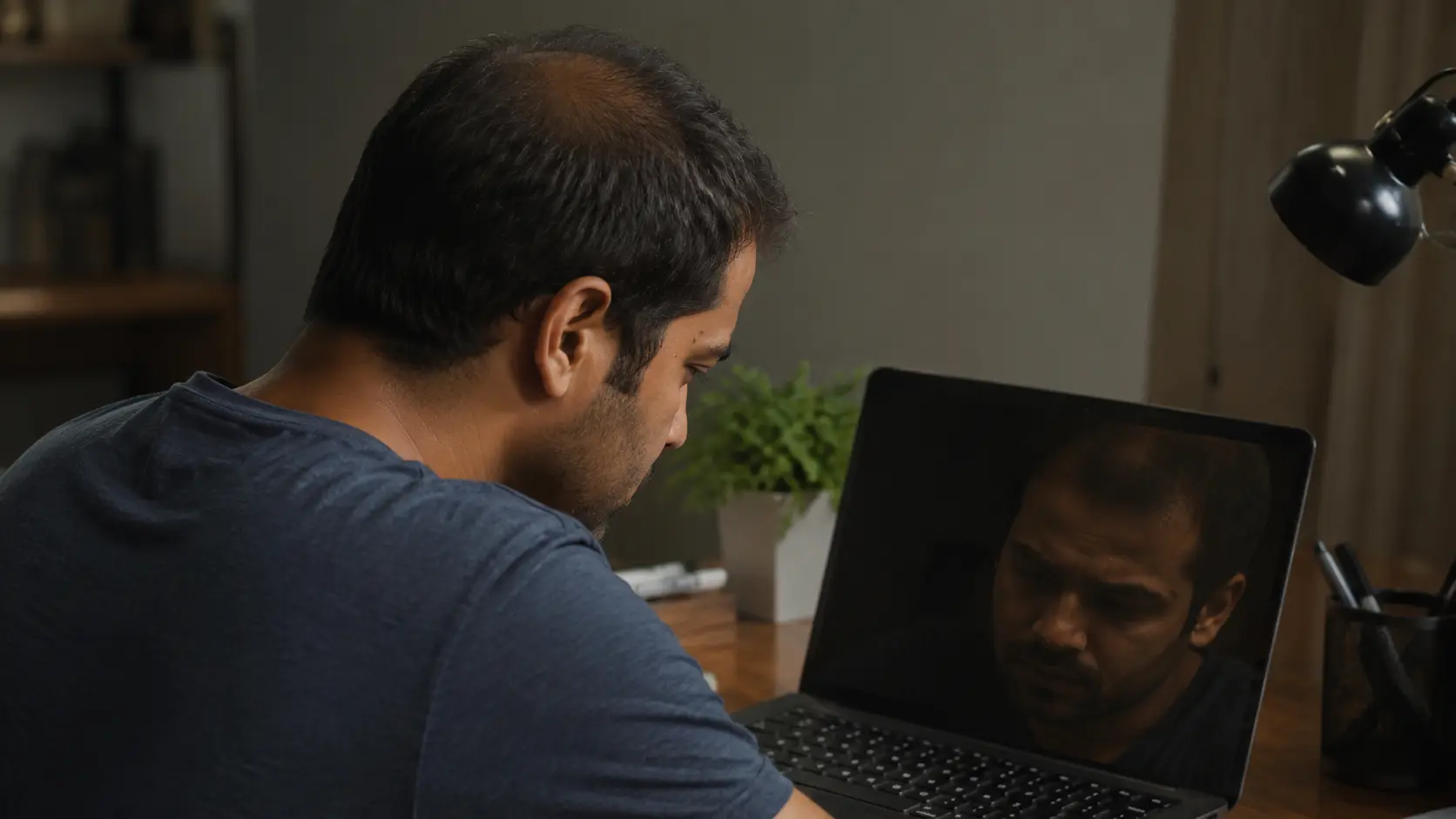
Hair loss in men is widely treated as a cosmetic problem. The research says otherwise. Studies have linked hair loss to lower self-esteem, depression, and anxiety. Some men also withdraw from social activities. This can affect relationships and career growth.
In this article, we look at what peer-reviewed studies actually say about hair loss. You will find the key statistics, major findings, and what they mean for men with hair loss today.
The evidence has been building for over two decades. One of the most cited studies on this topic is by Alfonso et al. It is a multinational survey. It was published in Current Medical Research and Opinion in 2005. It surveyed 1,536 men across five European countries. Its findings, alongside more recent research, form the foundation of what follows.
Table of Contents
What the Research Actually Shows
Research on hair loss and mental health spans many independent studies — not just one.
The Alfonso et al. survey included 1,536 men aged 18–45. More than 70% said hair was an important part of their appearance. About 62% believed hair loss could affect self-esteem. These were not men seeking treatment — they were drawn from the general population.
A more recent study adds to this picture. Zucchelli et al. (2024) published their study in Skin Health and Disease. They surveyed 177 men with androgenetic alopecia and alopecia areata. Participants had poorer wellbeing scores compared with population averages. More than half also reported lower confidence.
Hair Loss and Self-Esteem: What the Studies Found
Self-esteem is where the psychological impact shows up most reliably across the research.
The 2005 multinational survey found that 62% of men said hair loss affects self-esteem. Another 43% said noticing their hair loss made them worry about their attractiveness. These participants came from the general population. They were not men already seeking mental health support.
The 2024 survey added important texture to this. Men with androgenetic alopecia often reported feeling less attractive and looking older. Men with alopecia areata described a different experience. Some felt hair loss had changed their sense of identity. Others reported feelings of emasculation because the condition appeared suddenly and without warning.
Both groups showed lower average wellbeing scores than matched population norms. The impact on self-esteem is not limited to men who are highly focused on appearance. It is broad, consistent, and documented.
The Depression Link: Is It Real?
Yes, and recent research suggests it goes beyond correlation.
The Alfonso et al. survey found that 21% of men felt depressed when they first noticed their hair loss. That is one in five men, from a general population sample — not a psychiatric one.
A 2025 study took this further. Li et al. published their study in Clinical, Cosmetic and Investigational Dermatology. They used a bidirectional Mendelian randomisation method. The study used genetic data from more than 154,000 people. Men with androgenetic alopecia were more likely to develop clinical depression. The reverse depression causing hair loss was not supported by the data.
In plain terms: hair loss appears to contribute to depression. Depression does not appear to cause hair loss. This suggests a real link between the two conditions. It is not just a coincidence.
Anxiety, Social Avoidance, and Isolation
Hair loss does not only affect how men feel internally. It changes how they behave socially.
The 2005 survey found that 22% of men said hair loss had a negative effect on their social lives. Many avoided situations where others might notice their appearance. These included swimming pools, gym changing rooms, professional photos, and first dates.
Research also shows that men with alopecia areata often face social stigma. Some people assume they are seriously ill because of their visible hair loss. This increases anxiety and makes social situations more difficult.
Over time, these avoidance behaviours narrow life. Social circles shrink. Professional opportunities get side-stepped. The isolation compounds the underlying distress.
Why Younger Men Are Hit Harder
Age at onset is one of the strongest variables in how severely hair loss affects mental health.
When hair loss begins in a man’s mid-twenties, it collides with a period of identity formation. Researchers have described this as identity disruption. Some men felt they were ageing before they had developed a stable sense of self. Men with alopecia areata also reported feelings that went beyond appearance. Many linked their hair loss to a reduced sense of masculinity.
The unexpectedness is a key driver of distress. A man in his fifties losing hair has cultural framing for it. A man in his twenties usually does not. As a result, the emotional impact can be stronger.
Studies show that 37% of men linked hair loss to concerns about ageing, even within a sample of men aged 18–45.
For younger men, this can help. Effective non-surgical hair replacement options are available. Fast, visible results may meaningfully reduce the period of psychological distress.
The Impact on Relationships and Social Life
Hair loss affects how men show up in relationships, not just how they feel in private.
Research shows a clear finding. 38% of single men reported lower confidence in their attractiveness due to hair loss. Some avoided dating or social situations because they expected to be judged. Another 42% feared going bald, and 37% linked hair loss to concerns about ageing. These feelings can lead to low mood. They can also cause emotional withdrawal in a relationship. This may happen even when the cause is never discussed.
Studies also found higher appearance-related anxiety. This was seen in gay, bisexual, and other sexual minority men. Researchers noted that appearance can carry extra social pressure in some communities. This may increase the emotional impact of hair loss.
Why Men Don’t Talk About It; And Why That Makes It Worse
The most striking finding across the research is not the scale of distress. It is the silence around it.
Studies show that less than 10% of men were actively pursuing treatment for hair loss. Three in four had never sought treatment at any point, past or present.
More recent research confirmed the same gap. Distress was common. Help-seeking was rare. Two barriers were identified. One is traditional masculinity. It discourages men from seeking emotional support. The second is a lack of resources. There are very few services for men with alopecia.
As a result, many men carry a heavy psychological burden. They often do not name it. They may not say it to themselves or to others.
The Indian Context: When Hair Carries Extra Weight
Everything documented above applies globally. In India, the weight is heavier.
Hair in Indian culture is often linked to youth, vitality, and social value. These ideas also show up in family expectations. They also appear in marriage discussions. A man in his late twenties losing hair in Mumbai is not just managing self-image. He often deals with family comments. He also feels anxious about how he is seen in rishta conversations. He faces pressure in client-facing roles. First impressions matter in these jobs.
The masculinity norms that limit help-seeking in Western contexts are stronger here. Admitting that hair loss affects confidence is not easy. Seeking support for it can be even harder. Men suffer in silence longer. By the time they seek a solution, the psychological impact has often been building for years.
At Radice Rinnova, many of the men who come to us in Andheri West are not only concerned with how they look. Hair loss can affect confidence. It can affect work. It can affect relationships. It can also affect everyday life. That is exactly what the research documents — and it is what we see.
Does Treating Hair Loss Actually Improve Mental Health?
Research shows that treating hair loss can improve mental health — not just appearance. A 2025 study by Li et al. found a causal link between androgenetic alopecia and depression. This suggests that reducing visible hair loss may also ease depressive symptoms.
Earlier research supports this too. Men who sought treatment and reported success saw improvements. These ranged from 43% to 59%. They felt better about their self-esteem. They also felt better about their attractiveness. These were not small changes. They reflected a clear recovery in confidence after a known decline.
Non-surgical hair replacement delivers visible results faster than surgical routes. Once a system is in place, it needs regular care at home. This becomes a daily routine. It supports physical results. It also supports psychological recovery.
If hair loss affects more than your appearance, it can impact your confidence. It can also affect your social life and work. The team at Radice Rinnova are non-surgical hair replacement specialists in Andheri West. We offer a low-pressure consultation to help you understand your options..
Conclusion
The psychological impact of hair loss in men is real and well documented. Peer-reviewed studies report lower self-esteem. They also show links to depression and higher anxiety. Some men experience social withdrawal. Relationships can also become strained.
These findings come from general population studies, not just clinical samples. Younger men are hit harder. Men in India carry more cultural weight. And the vast majority of affected men never seek help.
Knowing this is documented, not personal weakness is the first step. Knowing that treatment has real psychological benefits is the second point. It is not only about appearance.
FAQ
Can hair loss cause depression in men?
Research suggests it can.A 2025 study by Li et al used genetic data from over 154,000 people. It found a clear result. Men with androgenetic alopecia have a higher risk of clinical depression. The reverse was not supported, depression does not appear to cause hair loss.
Does hair loss affect self-esteem?
Consistently, across many studies. A multinational survey by Alfonso et al. (2005) included 1,536 men. It found that 62% said hair loss affects self-esteem. Another 43% linked it to concerns about personal attractiveness.
Why do most men never seek help for the emotional impact of hair loss?
Two barriers appear consistently in the research. Traditional masculinity norms discourage emotional help-seeking. And there are very few support resources designed specifically for men with alopecia. Distress is common. Help-seeking is rare.
Can treating hair loss improve mental health?
Yes. Men who sought treatment in peer-reviewed studies reported improvements. These ranged from 43% to 59%. They felt better about their self-esteem and personal attractiveness. Research also suggests another point. Reducing visible hair loss may help ease depressive symptoms. It is not only about appearance.